How Certification Delays in Transaction Systems Alter Participation Patterns Across Mobile Blackjack Networks
Iris Coleman · Aug 21, 2026
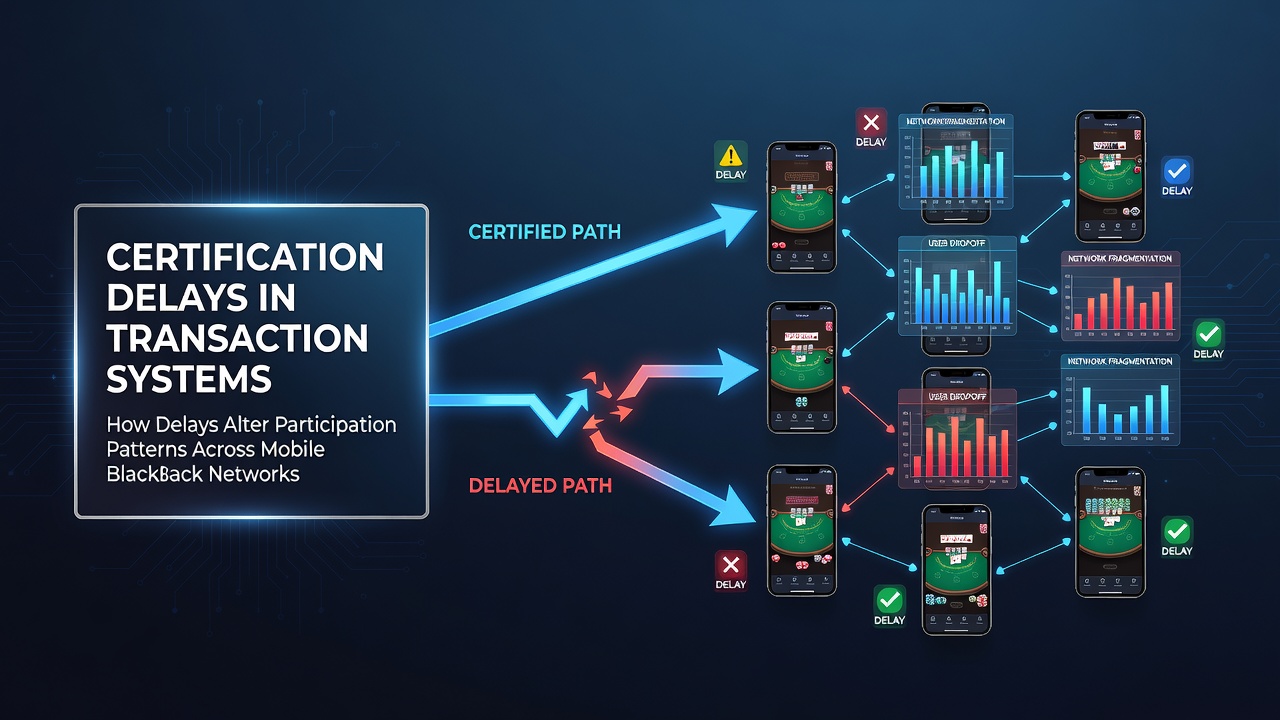
How Certification Delays in Transaction Systems Alter Participation Patterns Across Mobile Blackjack Networks
Certification delays in transaction systems create measurable disruptions across mobile blackjack networks because regulators must verify encryption standards, payment routing protocols, and anti-fraud mechanisms before any new processor can handle real-money wagers. These verification steps frequently extend beyond initial timelines when auditors encounter discrepancies in code submissions or when cross-border data transfer rules require additional review.
Certification Timelines and Their Direct Effects on Network Access
Transaction systems that support instant deposits and withdrawals in mobile blackjack environments undergo layered testing by independent laboratories before they receive operational approval, and any backlog at those laboratories pushes back launch dates for updated payment features. Data collected through 2026 shows that average certification periods stretched from 45 days to 92 days in several jurisdictions during the first half of the year, which forced operators to maintain legacy processors longer than planned. Players who rely on newer digital wallets therefore encounter temporary restrictions, and participation metrics on affected networks drop as users migrate to platforms that already cleared certification hurdles earlier.
Regulatory bodies in multiple regions coordinate their reviews when a single processor serves international markets, yet scheduling conflicts between agencies compound the overall delay. Observers note that networks operating in markets with synchronized approval calendars experience shorter interruptions compared with those serving fragmented regulatory landscapes.
Shifts in Player Behavior During Extended Approval Periods
Participation patterns change noticeably once certification delays become public knowledge because frequent users adjust their deposit habits to avoid interrupted sessions. Research tracking session lengths across major mobile blackjack operators indicates that average active minutes per user declined by 18 percent in regions where new payment certifications remained pending through July 2026. Many players instead concentrate activity on networks whose transaction systems already hold current certifications, which produces uneven traffic distribution across competing platforms.
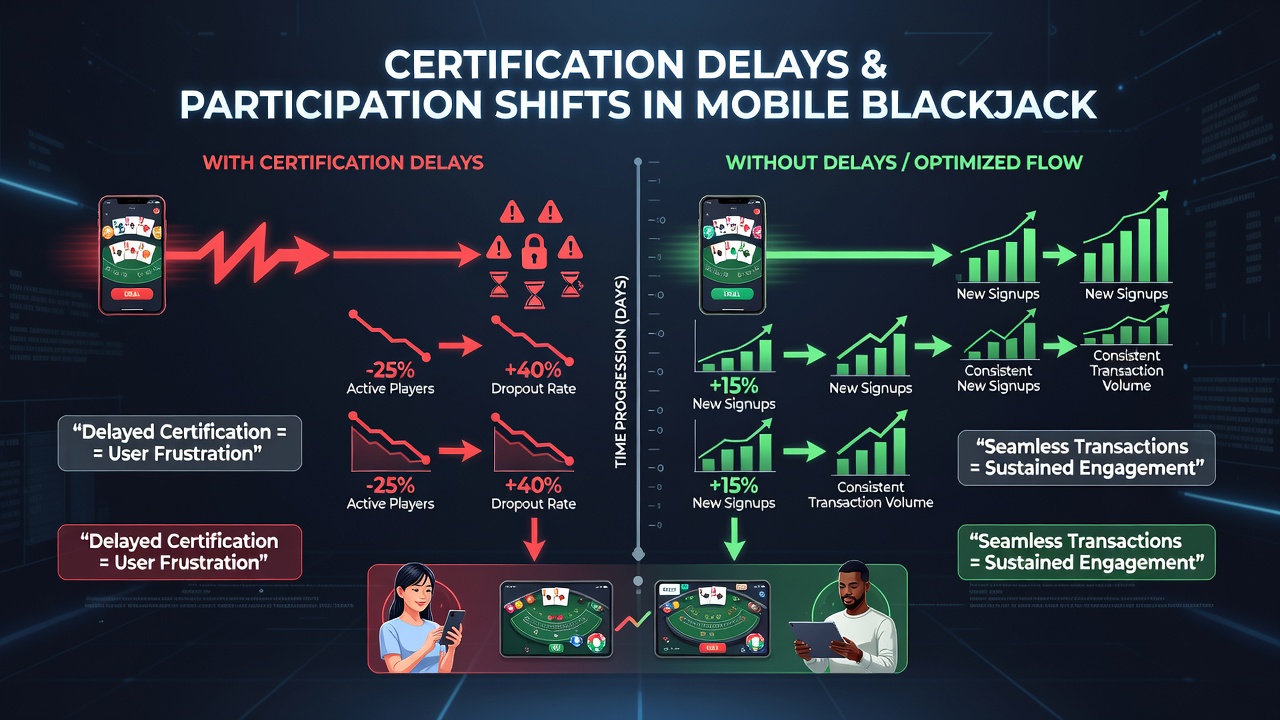
Geographic clusters reveal additional patterns. In areas where certification backlogs coincide with peak evening hours, session starts shift toward later night periods or move entirely to desktop versions that use pre-approved processors. Data from network analytics firms shows that cross-device migration rates increased by 27 percent during certification lag periods recorded in August 2026, while overall mobile blackjack handle remained stable because users simply relocated their activity rather than abandoning the game format.
Network-Level Adjustments and Regional Variations
Operators respond to certification delays by reallocating marketing budgets toward markets with faster approval cycles, and this strategic pivot further alters participation density on delayed networks. Reports compiled by the Alcohol and Gaming Commission of Ontario highlight that networks serving Canadian provinces maintained steadier player retention when provincial certification offices expedited reviews for established processors. In contrast, networks dependent on multi-jurisdictional processors faced steeper temporary declines until clearances arrived.
Payment protocol diversity also influences outcomes. Networks that already integrated multiple certified transaction options before delays occurred retained higher participation levels because players could switch methods without leaving the platform. Those limited to single processors experienced sharper drops until alternative routes received approvals.
Longer-Term Participation Trends
Evidence gathered through longitudinal studies suggests that certification delays produce lasting redistribution effects rather than permanent losses. Players who switch networks during delay periods often maintain accounts on both the original and the alternative platforms, which fragments loyalty metrics across the sector. Industry associations tracking user acquisition costs report that reacquisition campaigns become necessary once delayed certifications finally clear, because returning users require fresh incentives to reestablish prior activity levels.
August 2026 data further indicates that networks incorporating automated compliance monitoring tools reduced future certification intervals by an average of 23 days compared with those relying on manual submissions. This technical adaptation allows operators to anticipate regulatory requirements earlier in the development cycle and thereby minimize disruptions to participation patterns.
Conclusion
Certification delays in transaction systems continue to reshape participation across mobile blackjack networks through predictable mechanisms of access restriction, player migration, and regional traffic redistribution. Networks that maintain diversified certified payment options and coordinate proactively with regulatory timelines demonstrate greater resilience in preserving consistent engagement levels. As approval processes evolve alongside new security standards, the patterns observed through mid-2026 provide a baseline for anticipating how future delays will affect player distribution in this segment of mobile gaming.