How Time Zone Differences Shape Peak Activity Periods in Global Online Table Game Communities
Carlo Schmidt · Jul 24, 2026
How Time Zone Differences Shape Peak Activity Periods in Global Online Table Game Communities
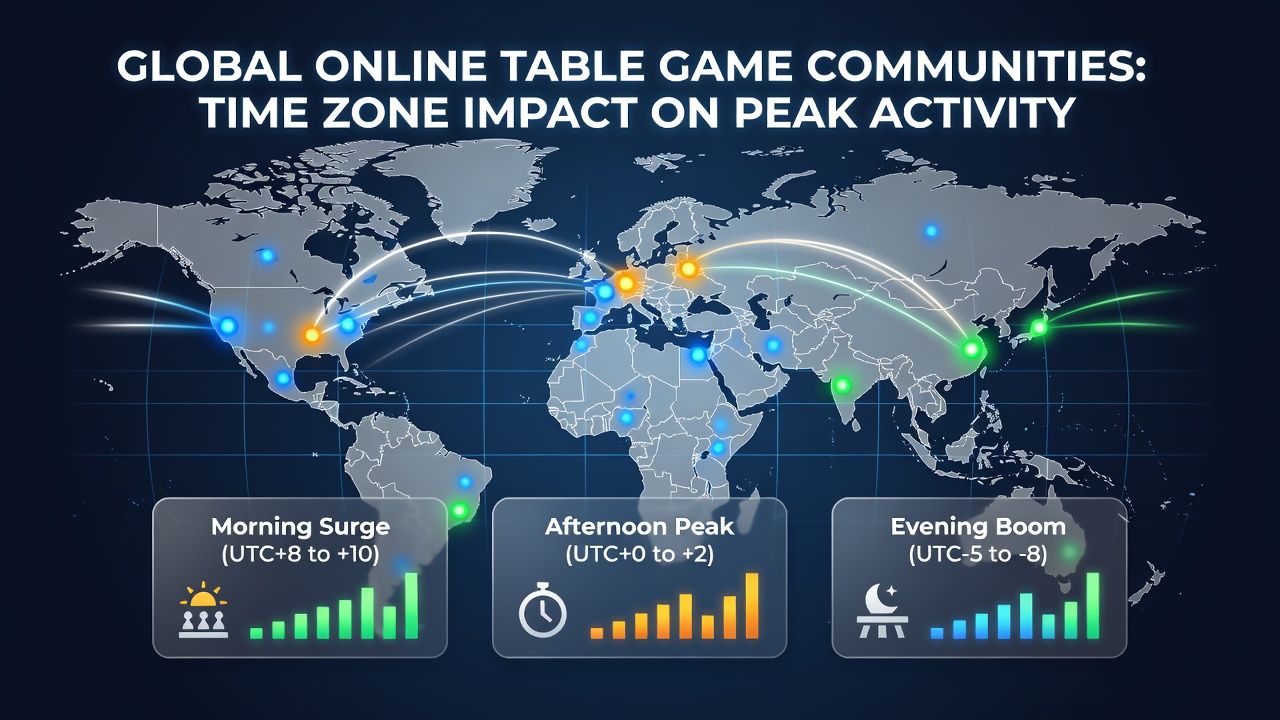
Time zone variations create distinct waves of player engagement in online table game communities where poker, blackjack, and roulette sessions draw participants from multiple continents at once. Observers note that servers hosting these games experience traffic surges tied directly to local evening hours in each region, while overlaps between zones produce the highest volumes of simultaneous activity. Data from industry analytics platforms shows European players often dominate sessions between 18:00 and 22:00 UTC, whereas North American participants join later in the same window as their afternoon transitions into evening play.
Regional Activity Patterns Across Continents
Players in the Asia-Pacific region generate early spikes in daily traffic because their evenings align with UTC morning and early afternoon periods. Research from gaming analytics firms indicates Australian and Japanese users frequently log in between 08:00 and 14:00 UTC for live dealer tables, and this pattern holds steady even during mid-week periods. Meanwhile South American communities peak later in the UTC timeline, typically between 20:00 and 02:00 UTC, which overlaps with North American evening hours and creates extended windows of high table occupancy.
European markets contribute another major layer since their prime time falls between 17:00 and 23:00 UTC. When these hours coincide with Asian late-night or North American afternoon sessions, table game lobbies fill rapidly and tournament structures adapt by scheduling start times that capture multiple regions. Figures from July 2026 platform reports reveal that blackjack tables operating on shared servers saw average occupancy rates climb above 85 percent during these cross-zone overlaps compared with single-region periods.
Overlaps Drive Global High-Volume Windows
The most intense activity occurs when two or more major regions enter their peak simultaneously. One documented case involved a popular roulette network where European evening play merged with emerging East Asian activity around 19:00 UTC, producing queue times that stretched beyond standard limits until additional tables opened. Platform operators respond by adjusting dealer shift schedules and bonus timing to match these predictable surges, which data shows recur on consistent weekly cycles.
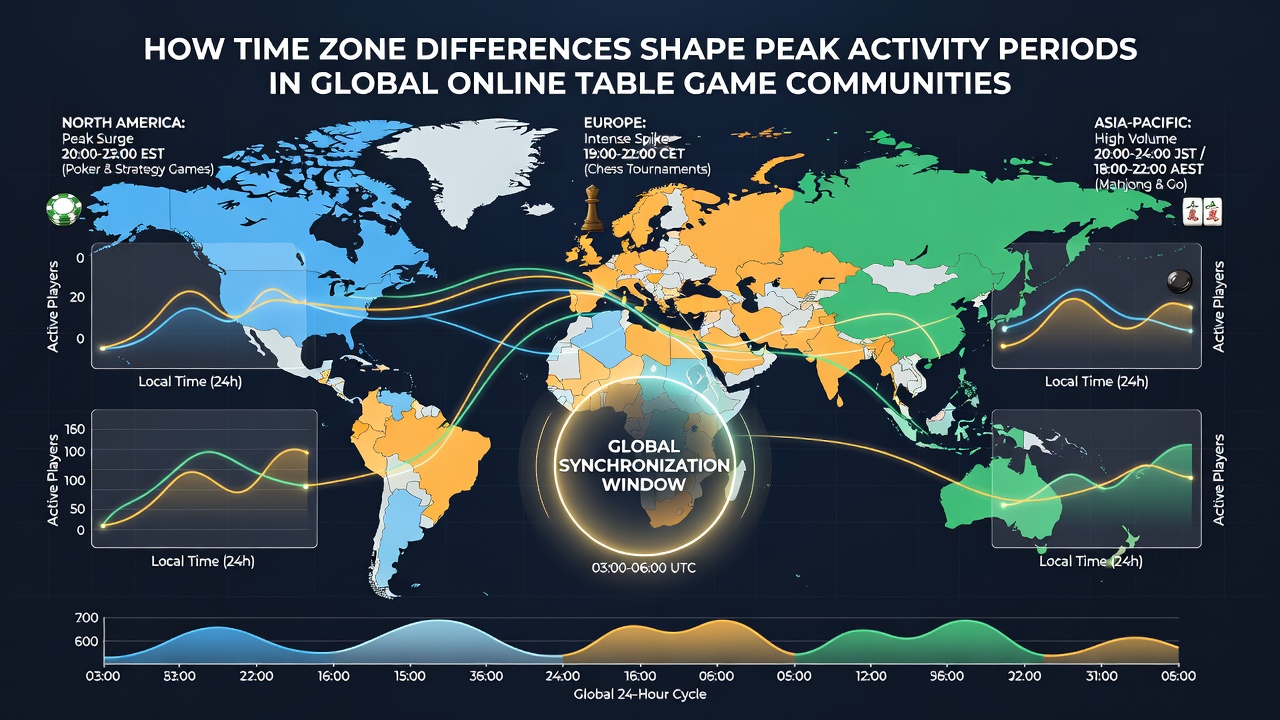
Poker tournaments illustrate the effect clearly because their fixed start times must accommodate diverse player bases. Organizers schedule major events during UTC evening blocks that capture both European and North American audiences while still attracting late-night participants from further east. According to reports published by the European Gaming and Betting Association, multi-table tournaments held in July 2026 recorded registration numbers 30 percent higher when start times fell between 18:00 and 21:00 UTC compared with earlier or later slots.
Platform Adjustments and Game Format Responses
Live dealer providers modify camera schedules and table availability based on time zone data collected over months of operation. Blackjack and baccarat tables often receive additional staffing during the 17:00 to 01:00 UTC window because multiple regions remain active at once. In contrast, niche formats such as speed poker see concentrated demand from single zones and therefore operate with fewer tables outside those specific hours.
Payment processing volumes follow the same rhythm since deposits and withdrawals spike alongside login rates. Canadian regulatory filings from provincial gaming authorities indicate that transaction monitoring systems flag higher volumes precisely during these cross-zone peaks, prompting operators to maintain elevated support staffing. The pattern repeats across licensed platforms regardless of specific game type, although roulette communities show slightly broader distribution because sessions require less continuous attention than poker hands.
Conclusion
Time zone differences therefore function as the primary driver behind recurring activity cycles in global online table game communities. Platforms track these patterns through aggregated login data and adjust operations accordingly, while players experience varying wait times and table availability depending on their location. The resulting structure produces predictable high-volume periods that repeat daily and weekly, shaping everything from tournament scheduling to dealer allocation across international networks.