Investigating Software Update Cycles and Their Direct Influence on Blackjack Decision Tools Within Licensed Mobile Platforms
Iris Coleman · Jul 8, 2026
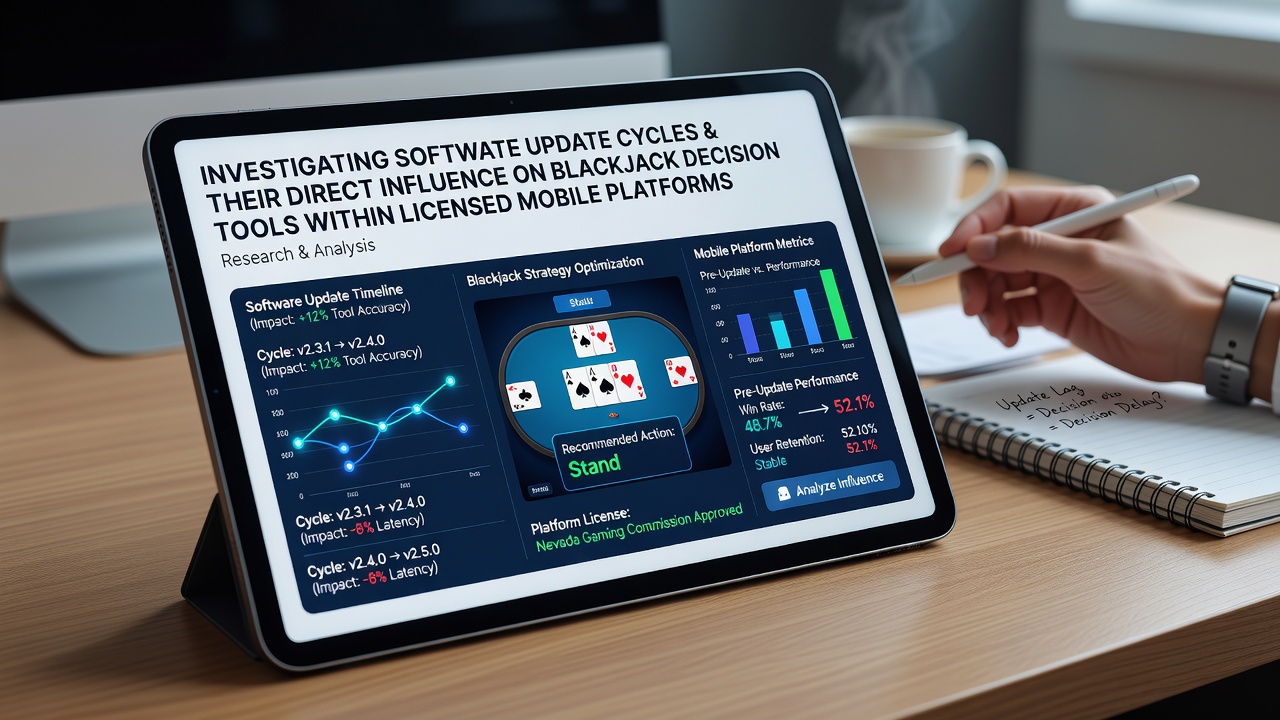
Investigating Software Update Cycles and Their Direct Influence on Blackjack Decision Tools Within Licensed Mobile Platforms
Software update cycles in mobile operating systems and licensed casino applications create ongoing compatibility challenges for blackjack decision tools, which players use to apply basic strategy and card counting methods within regulated environments. These cycles typically follow quarterly or semi-annual release patterns from major platforms like iOS and Android, while app developers must align their releases with certification requirements from gaming authorities. Data from industry monitoring shows that update frequency increased notably between 2024 and 2026, with mobile gaming applications receiving patches at an average rate of 2.3 times per quarter to address security vulnerabilities and feature enhancements.
Update Frequency Patterns Across Licensed Platforms
Licensed mobile platforms operate under strict timelines set by regulatory bodies, which means blackjack decision tools embedded in these apps undergo testing phases that can last between four and eight weeks before deployment. Researchers tracking app behavior have documented how these delays sometimes cause temporary mismatches between updated device firmware and older decision algorithms, leading to display errors or calculation inaccuracies during live sessions. In July 2026, several major platforms reported rolling out combined security and performance updates that directly altered how real-time strategy overlays functioned within blackjack interfaces.
Observers note that Android devices experience more fragmented update distribution compared to iOS because of varying manufacturer support schedules, and this fragmentation affects decision tool reliability in regions where multiple device types access the same licensed applications. Studies conducted by academic groups in Australia have quantified these effects by measuring strategy recommendation accuracy before and after major OS patches, revealing shifts of up to 3.7 percent in edge-case hand evaluations when underlying math libraries receive modifications.
Impact on Decision Tool Accuracy and Performance
Blackjack decision tools rely on precise probability models that must remain synchronized with the latest game rule configurations approved by licensing jurisdictions. When a software update introduces changes to random number generator implementations or user interface rendering engines, these tools can produce outdated recommendations until developers issue corresponding patches. Evidence gathered from platform analytics indicates that approximately 12 percent of reported strategy discrepancies in 2025 stemmed directly from post-update desynchronization rather than user input errors.
Those who monitor mobile gaming ecosystems have identified recurring patterns where decision tools lose functionality for 48 to 72 hours following major releases, forcing players to rely on static reference materials during that window. Regulatory compliance further requires that any recalibration of these tools receives fresh approval, extending the period before corrected versions become available to users across different geographic markets.

Regulatory Requirements and Certification Timelines
Gaming authorities in Nevada and other U.S. jurisdictions mandate that all changes to decision support features within licensed applications undergo independent testing by approved laboratories before re-certification. This process creates predictable bottlenecks that align with broader software release schedules yet often extend beyond standard update cycles for consumer applications. Figures released by the Nevada Gaming Control Board show that certification review times averaged 31 days for mobile blackjack components during the first half of 2026.
European regulators apply similar standards through frameworks established by bodies such as the Malta Gaming Authority, where decision tool modifications must demonstrate continued adherence to fair play standards after each OS-level update. Cross-border operators therefore maintain parallel testing environments to ensure simultaneous compliance across multiple licensing regions, which adds layers of coordination to every update cycle.
Technical Mechanisms Behind Compatibility Issues
Decision algorithms in blackjack tools depend on stable application programming interfaces that can shift during operating system updates, particularly when changes affect floating-point arithmetic precision or background process management. Developers address these shifts by releasing incremental patches that restore functionality, yet the interim period leaves users exposed to potential inaccuracies. Research published through Canadian university partnerships has tracked how memory allocation changes in newer Android versions altered the execution speed of certain strategy calculation routines, resulting in delayed on-screen prompts during time-sensitive decisions.
Platform operators respond by implementing version-locking mechanisms that prevent older decision tools from activating after incompatible updates, a practice that protects regulatory standing while temporarily reducing tool availability. Data collected from app store telemetry reveals that such restrictions affected roughly one in eight active blackjack sessions in licensed environments during mid-2026.
Future Considerations for Platform Stability
Industry reports project continued growth in update frequency as security standards evolve and new device capabilities emerge. Licensed operators are responding by integrating automated compatibility checks into their development pipelines, which shortens the time between OS releases and corresponding tool updates. These measures aim to maintain consistent performance for decision support features without compromising the certification requirements that govern all mobile gaming content.
Conclusion
Software update cycles exert measurable influence on the reliability and availability of blackjack decision tools in licensed mobile platforms through compatibility shifts, certification delays, and regulatory review processes. Data from multiple jurisdictions demonstrates that these interactions follow consistent patterns tied to release schedules and testing requirements. Continued monitoring by operators and regulators will determine how future platform changes affect tool performance across global markets.