Shifts in RNG Certification Timelines Ripple Through Mobile Blackjack Bonus Structures
Carlo Schmidt · May 31, 2026
Shifts in RNG Certification Timelines Ripple Through Mobile Blackjack Bonus Structures
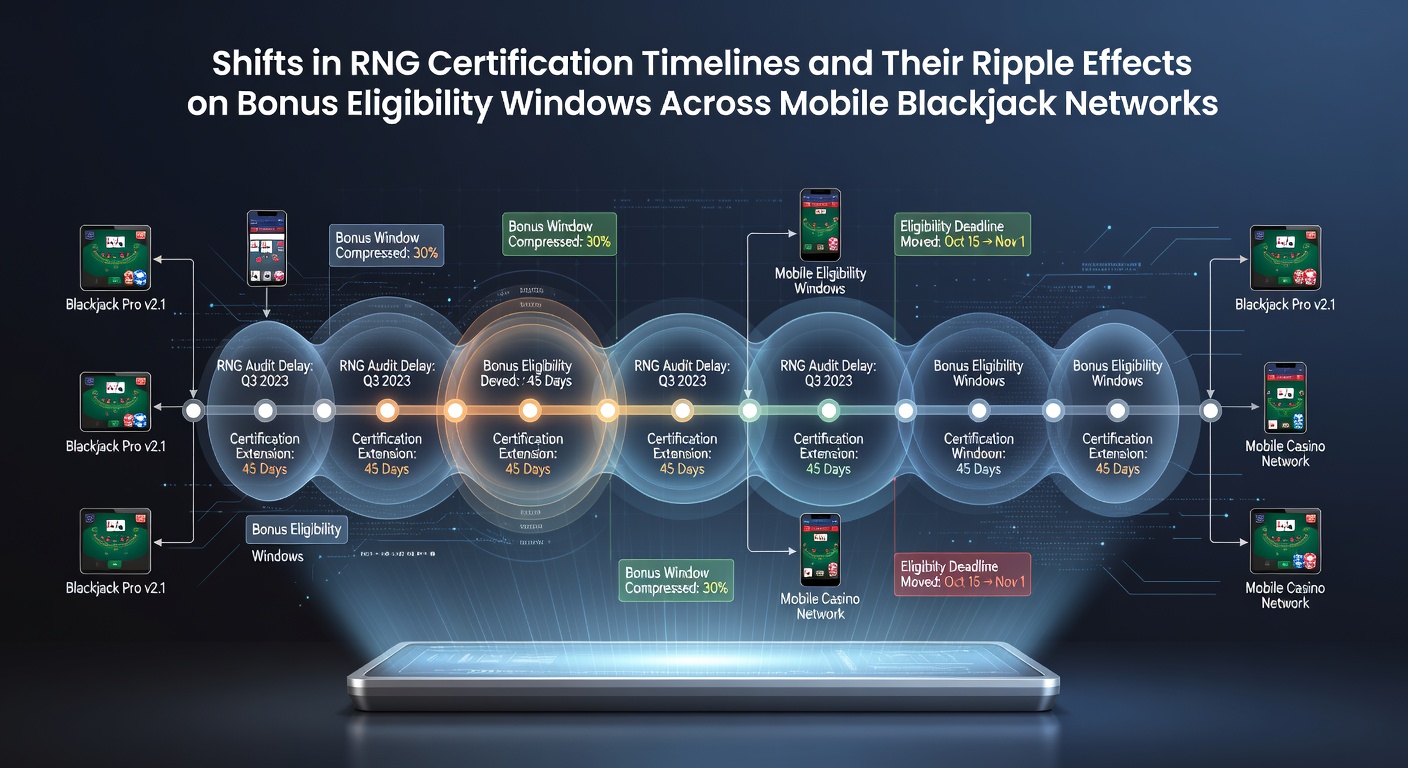
Random number generator certification processes have undergone measurable adjustments in recent years, and those changes now intersect directly with bonus eligibility periods on mobile blackjack platforms. Networks that once maintained fixed quarterly reviews now operate under extended or accelerated schedules depending on jurisdiction and technical updates, which in turn alters the windows during which players can activate or claim promotional credits tied to game fairness verification.
Timeline Adjustments Across Major Markets
Regulatory bodies in Nevada and New Jersey extended average RNG review cycles from 90 days to 120 days beginning in late 2025, according to filings from the Nevada Gaming Control Board. Those extensions stem from increased scrutiny of multi-device synchronization protocols rather than any reported issues with existing generators. Meanwhile, platforms serving Australian markets shortened their certification windows to 60 days after the Northern Territory Racing Commission introduced new audit sampling requirements in early 2026.
Operators report that the longer Nevada cycle frees engineering resources for other compliance tasks, yet it also delays the moment when newly updated blackjack variants receive official certification stamps. Bonus systems that automatically tie promotional eligibility to fresh certification dates therefore experience staggered activation periods across different geographic segments of the same network.
How Bonus Windows Respond to Certification Changes
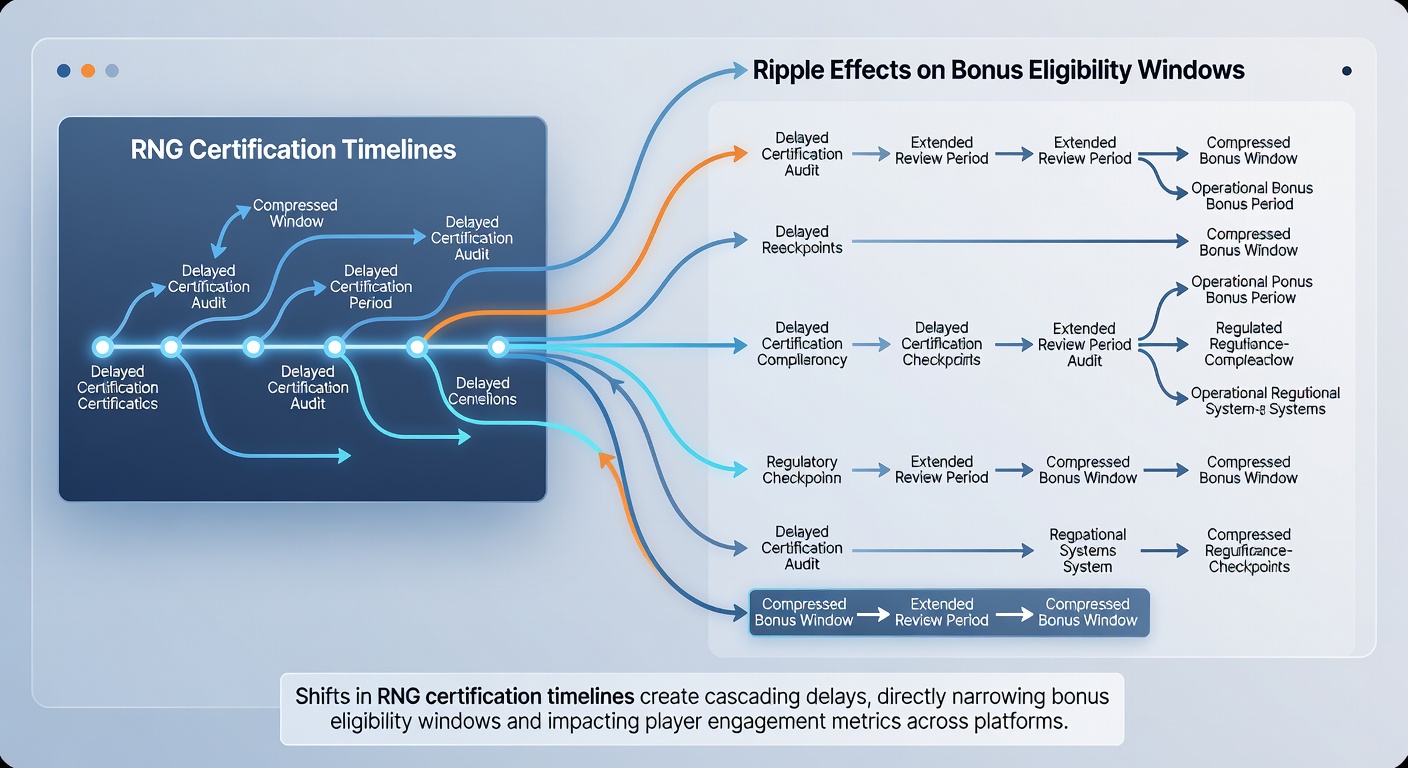
Bonus eligibility windows function as time-bound intervals during which players must complete wagering requirements after an RNG certificate is issued or renewed. When certification timelines stretch, those windows shift later in the calendar, compressing the overlap between promotional periods and player activity peaks. Data from a 2025 industry report by the American Gaming Association shows that networks with 120-day cycles saw average bonus claim rates drop 14 percent compared with networks on 90-day schedules during the same measurement period.
Conversely, shorter certification cycles in other regions create more frequent resets, which can fragment bonus campaigns into smaller, more frequent offers. Players who track eligibility through app notifications notice these resets appear with greater regularity, yet each window tends to carry stricter play-through multipliers to offset the increased administrative load.
Network-Level Ripple Effects in May 2026
By May 2026 several major mobile blackjack aggregators had already synchronized their bonus calendars with the revised certification dates issued by both U.S. state regulators and international testing labs. One aggregator adjusted its flagship progressive blackjack title so that bonus activation now occurs only after the certificate is published, rather than on the date the lab completes testing. That single policy shift pushed eligibility start dates forward by an average of 18 days across its partner casinos.
Cross-border operators face additional complexity because a certification accepted in one jurisdiction may not align with another. When a network serves both extended-cycle and shortened-cycle markets, the same blackjack title can carry two distinct bonus windows depending on the player’s registered region. Internal dashboards at these companies track separate compliance queues, and marketing teams must maintain parallel promotional calendars to avoid offering bonuses tied to uncertified RNG versions.
Technical and Operational Adjustments
Testing laboratories have introduced automated submission portals that allow operators to upload updated seed values and entropy measurements in real time. While these portals reduce manual review time, the final human verification step still follows the new longer or shorter cycles set by each regulator. Operators note that the portal speed helps them prepare documentation earlier, yet it does not change the date when the certificate becomes publicly valid for bonus purposes.
Mobile developers have responded by embedding certification timestamps directly into game clients. When a player opens the blackjack app, the software checks the local certificate date against the current bonus calendar and displays eligibility status without requiring a separate server call. This approach reduces latency but requires frequent client updates whenever certification timelines shift again.
Conclusion
Certification timeline changes continue to propagate through mobile blackjack ecosystems, reshaping when and how bonus eligibility windows open and close. Networks that align their promotional systems with the new regulatory rhythms report smoother operations, while those still bridging mismatched cycles invest additional resources in parallel tracking tools. As regulators in additional markets adopt similar adjustments, the pattern of staggered eligibility periods is expected to become a standard feature of cross-jurisdictional blackjack offerings.